
What is the importance of space exploration?
Written by: Farzam Ur Rehman
Department: BS Physics
With the cold war coming to a halt, the dream of breaking through our planet’s atmosphere was becoming a reality. The world of plentiful opportunities began to pave its way into the realm of space exploration. In the Space-race, the Soviet Union (USSR) was the first country to launch a man-made object into space, followed by the Americans. Following these early days, significant developments in space technology have been made, and thus, space exploration has become limitless. However, many individuals question the need for investing so heavily in such ventures, while numerous humanitarian problems still exist. This article attempts to answer the question, “why is space exploration important?”
Many argue that the capital invested in space exploration programs should be spent elsewhere, perhaps in education, improved infrastructure, and medical facilities. There is also a considerable element of risk and uncertainty with space programs, and there is no guarantee whether or not a project would yield fruitful results. A failure results in billions of dollars of financial loss, and wasted effort is unaccounted for. However, little do the counter activists realize the gigantic impact that space programs can have on our society and our human race.
Space exploration has allowed significant developments in new technologies and research, which have everyday applications. Technologies such as global positioning systems (GPS), solar cells, weather prediction systems, and ultraviolet (UV) filters used in sunglasses and cameras are revolutionary technologies that have remarkably improved people’s living standards. They are directly a result of investment in space exploration. There is also a variety of medical research conducted in space, which was otherwise not possible on Earth. Such medical practices would allow breakthroughs in the field of biological science, improving our health care astronomically.
Besides tech, space exploration has also opened doors which may lead to space colonization. It is the ultimate backup plan for the human race, one that we do not care to admit but would surely need in the future. The Earth is overpopulated, and the numbers are unlikely to decrease anytime soon. Eventually, a time will come when there would not be sufficient resources to provide for all the people. If something happened to Earth, our species could exist no more. Space colonization is a way of ensuring that no matter what happens to our planet, humanity’s survival would be guaranteed. Companies like SpaceX are working vigorously to colonize Mars. We have also discovered that Earth is not the only planet of its kind and that several exoplanets can accommodate carbon-based life forms and sustain life. Although they seem out of reach at the time, perhaps in the future, they would become reachable.
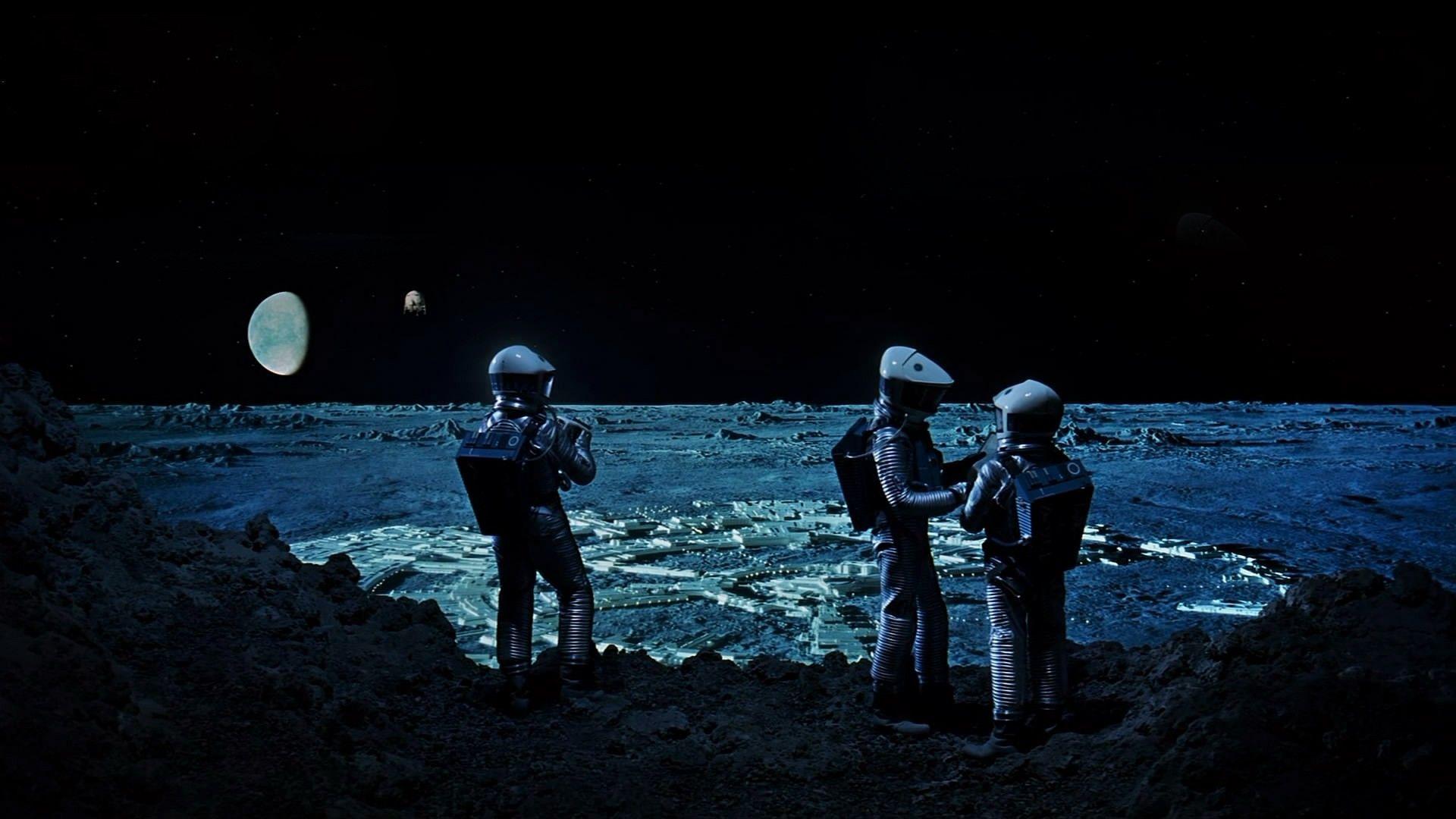
Space mining is another source of motivation for interstellar travel. The universe is an infinite supply of energy and resources. Rather than deplete our planet with its limited natural reserves, we can look for other options. Start-ups like “Planetary Resources” want to mine asteroids instead of Earth, which would effectively mean an endless supply of raw materials rare on our planet. American Astrophysicist Neil deGrasse Tyson said, “Aliens might be surprised to learn that in a cosmos with unlimited starlight, humans kill for energy buried in the sand”.
Space exploration also allows for the progression of science as a subject. Using the Hubble Telescope’s ground-breaking inventions, we can see 13 billion light-years away in the universe. Using the observations from Hubble, scientists were able to make important discoveries in not just Astrophysics but natural science in general. Einstein’s theory of general relativity only showed its true colors when humans could investigate infinity and beyond. The detection of gravitational waves and black holes confirmed Einstein’s theories and opened up many horizons for humanity to ponder.
There is, however, one solution to a problem we still hope to find through space exploration. With our technology, we have simulated and observed massive extinctions, such as that of the dinosaurs caused by an asteroid collision. And if it could happen to the dinosaurs, then it could very well happen to us too. – it is not a matter of “if,” but “when.”This is why scientists are looking to find permanent solutions to asteroid collisions by turning their heads towards space exploration programs. However, what breakthroughs in science and engineering we require to do so remain uncertain.
Humans are explorers. Apart from all the practical reasons for space exploration, one of the principal reasons we must continue is that quest is in our nature, defying to which can derogate the meaning of life. Exploring space is much more than discovering new worlds and building advanced technologies; it is an opportunity to work together as a species towards a common goal, irrespective of nationality, race, or gender. If we stop exploring, we stop being human.
 The Cosmic Rambler
Leave a comment